What I Wore
A midnight navy dinner jacket, and why I stopped wearing black
5 min read
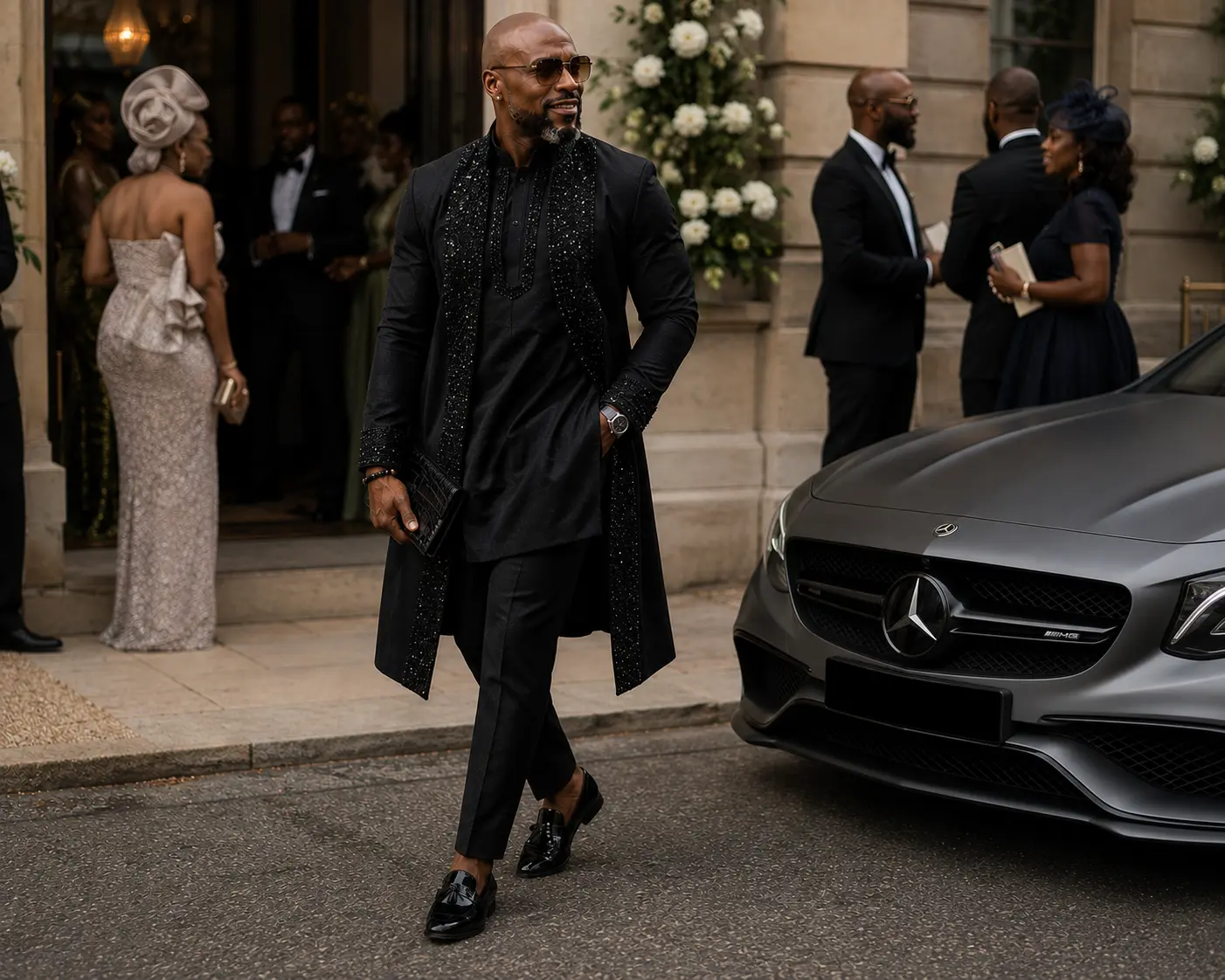
For years I wore black to black tie because the invitation said black. Then I saw the photographs. A first-hand note on navy, grosgrain and reading the room.
For years I wore black to black-tie nights because the invitation said black tie and black felt like the obedient answer. Then I saw the photographs. In a warm-lit Mayfair ballroom, black does two things: it flattens into a silhouette with no detail, and it puts you in the same cloth as the men carrying trays.
Midnight navy solves both. It reads darker than black under electric light — genuinely, that is not a myth tailors invented — and it holds a shape you can see. The lapel catches light. The shoulder has an edge. You look like a person in a photograph rather than a hole in one.
This jacket is single-breasted, one button, with a grosgrain peak lapel and a clean chest. No shawl collar, because a shawl needs a certain amount of chest to look like a decision rather than a costume. Trousers are cut with a single pleat and a half-break, a satin stripe down the side, and no belt loops — a dinner suit with belt loops is a business suit with ambitions.
The shirt is the part most men lose. Marcella bib, turn-down collar, double cuffs, studs rather than buttons. I wore a hand-tied bow tie in the same grosgrain as the lapel. It sat slightly crooked by midnight and that is exactly the argument for tying it yourself.
— What I would change: the trousers were a half-inch long. In the seated photographs the hem stacks, and once you notice it you cannot stop noticing it. I would also skip the pocket square I chose — white linen against a Marcella bib is one white too many. Next time, nothing in the pocket at all.
The lesson: dress codes tell you the category, not the answer. Read the room, the light and the photographs that will outlive the evening.