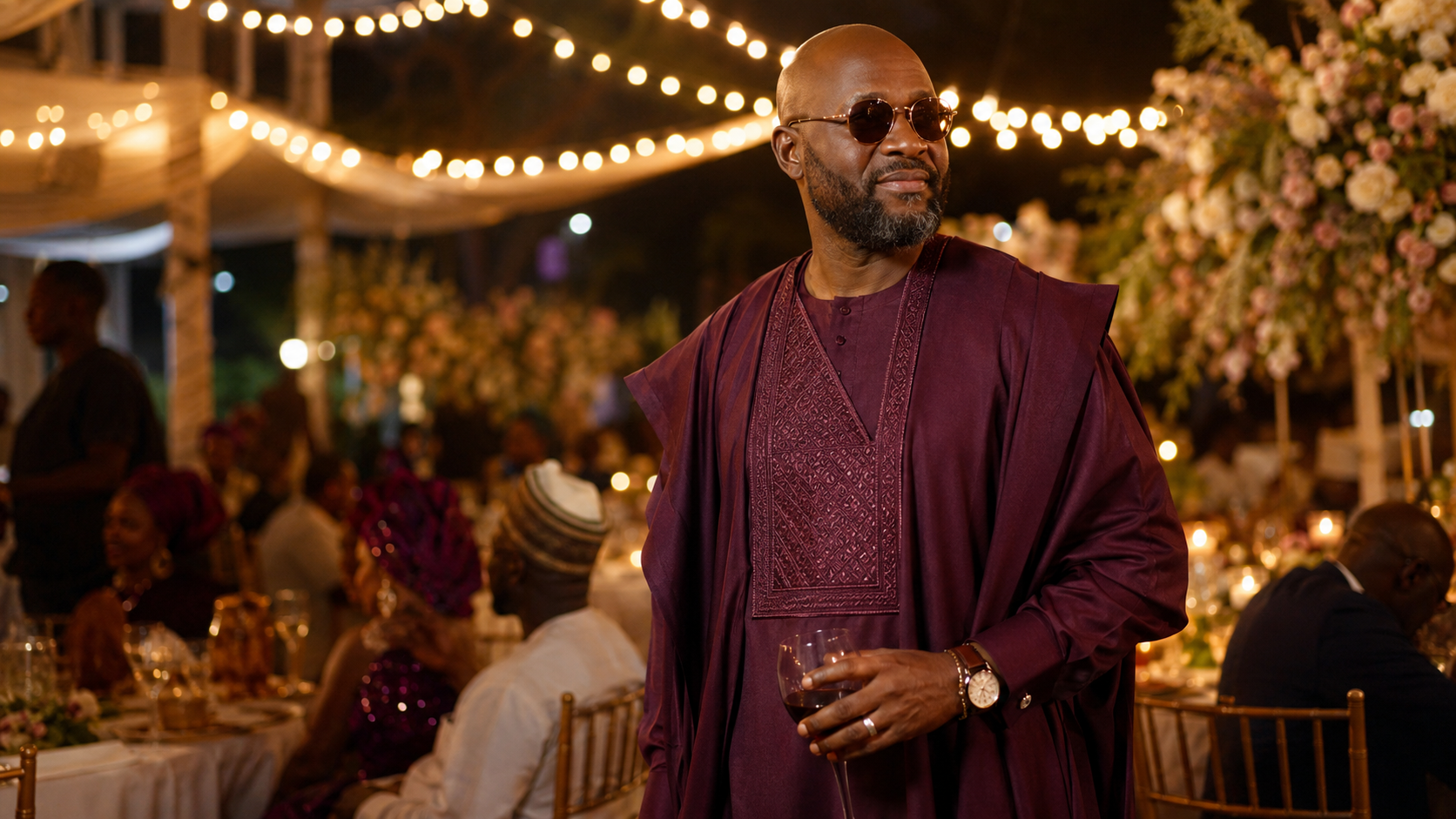
I have been to more than thirty Nigerian weddings in Britain. I have been underdressed in a marquee in Kent, overdressed in a church hall in Peckham, and once wore an agbada so heavy I spent the reception outside. This is everything I wish somebody had told me the first time.
Nothing here is theory. Every recommendation is something I have worn, bought, had made, or watched go wrong on somebody I know. Where I have not tried something myself, I say so.
01
Work out what you were actually invited to
Most men get this wrong before they have looked at a single garment. A Nigerian wedding in Britain is usually two or three separate events, and they do not share a dress code.
The traditional engagement. Often a Saturday afternoon in a community hall or hotel function room. This is the most Nigerian room you will stand in all year and the one where a suit reads as indifference. Agbada, kaftan or a good senator set.
The white wedding. Church, then a reception. British formality with Nigerian volume. A suit is correct here; so is a well-cut senator set.
The evening reception or after-party.Owambe register. Colour, cloth, and the assumption that you will be photographed. Lighter than the afternoon look, and it should be a second outfit if you can afford one.
If the invitation does not say, the venue tells you. A hotel ballroom in Mayfair and a hall in Thamesmead are asking for different things at the same level of respect.
02
Aso ebi, and why it outranks your taste
Aso ebi is the family cloth. The couple pick a fabric or a colour, and the people closest to them have outfits made from it so the family reads as a single block in the photographs.
If you have been asked to wear aso ebi, wear it. I have watched men quietly decide that the colour did not suit them and turn up in something better cut. They were right about the cut and wrong about everything else. The photographs outlive your opinion.
What you can control: where you have it made, how it is cut, and how it fits. Cloth arriving four weeks out is normal, which means a tailor who can turn it around properly is worth more to you than the fabric itself.
If you have not been asked, do not wear the family colour. Standing next to the family in their exact cloth without belonging there is the most avoidable mistake on this list.
03
The four registers, and what each one asks of you
Agbada. The most formal, the most ceremonial, the hardest to buy well. A good one has an actual shoulder and a hem that hangs straight; a bad one is a sack with embroidery on it. Single tone, matte cloth, embroidery narrow and high on the chest.
Kaftan and trouser. My default. Reads as serious at an engagement and comfortable at a reception, and it is the register where made-to-measure buys you the most for your money.
Senator set. The most useful thing a Nigerian man in Britain can own. Correct at a white wedding, at church, at a networking dinner. Buy it in a matte wool-blend and have the waist and sleeve adjusted.
Suit or black tie. Right for the white wedding and for hotel receptions. Midnight navy over black — it photographs better in the low, warm light these rooms always have.
04
Three complete looks, by budget
Prices are what things actually cost in Britain in 2026, including alterations, which almost nobody budgets for and everybody needs.
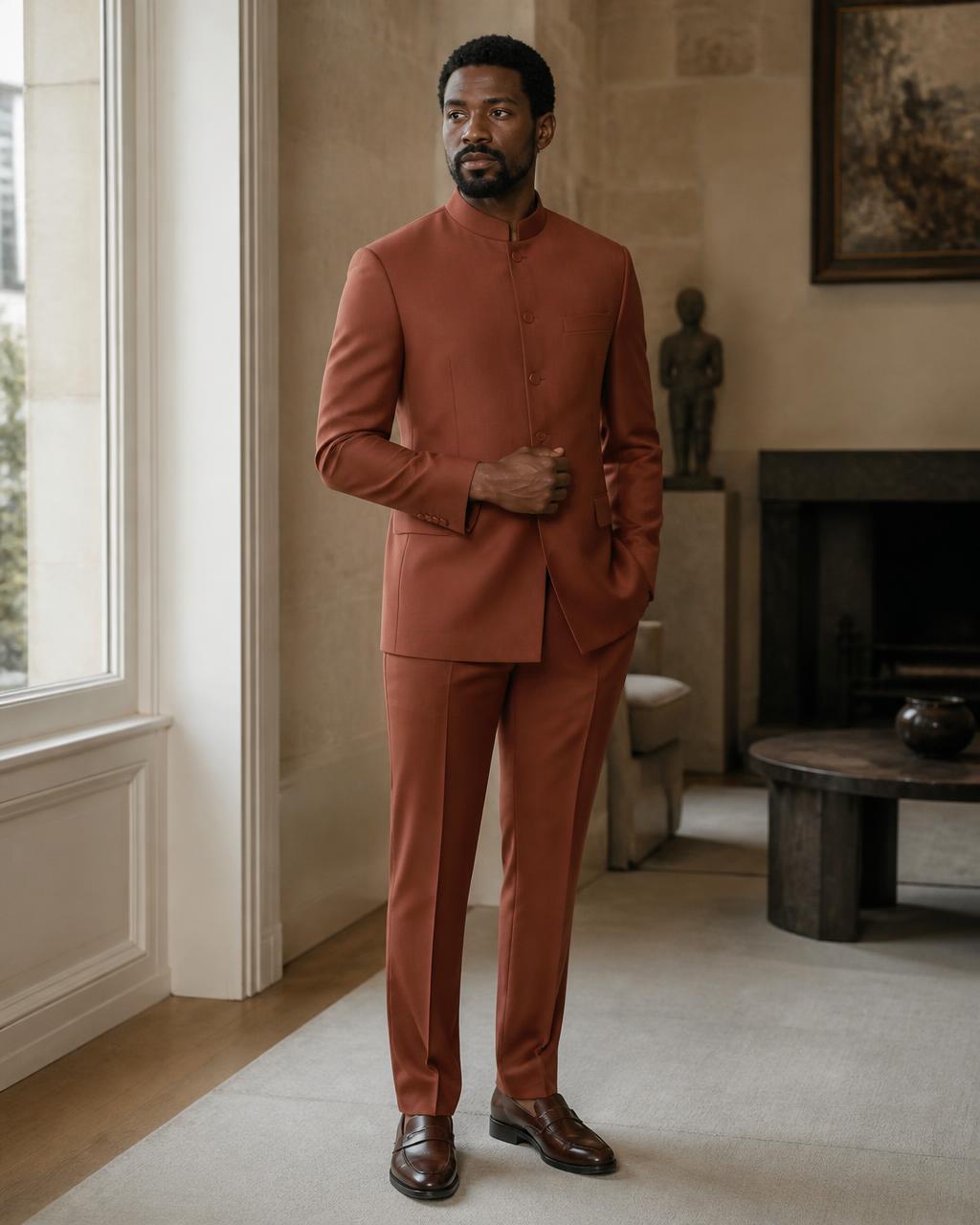
£250 — the honest first outfit
- A single-tone senator set in a matte wool-blend, bought off the peg.
- £40 to a tailor: waist in, sleeve length corrected, hem taken up.
- Plain black leather slip-ons, no hardware. Wooden bead bracelet, nothing else.
I wore a version of this to my cousin's white wedding in Dagenham and it did not let me down once.
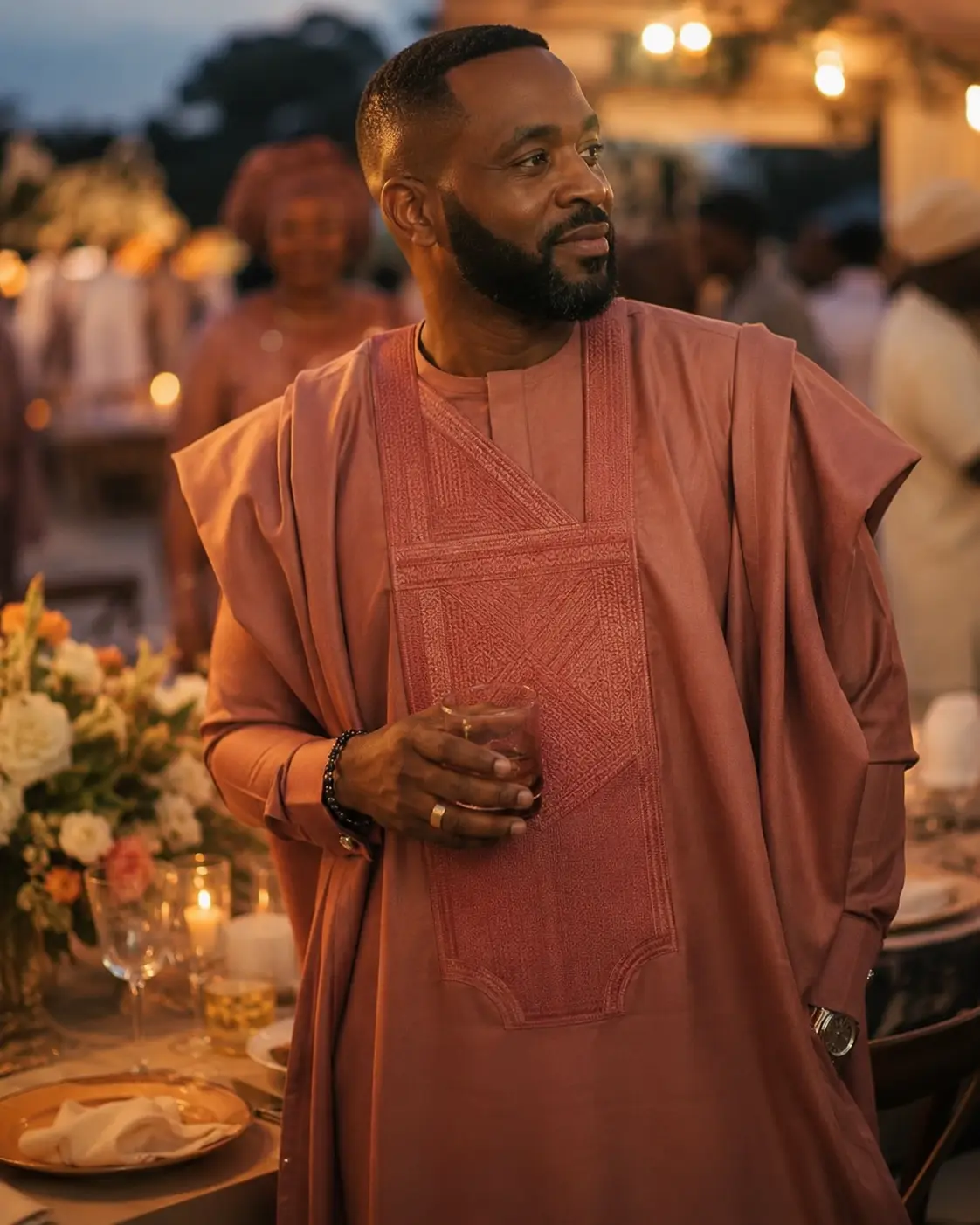
£600 — the outfit people ask you about
- Made-to-measure kaftan and trouser in raw silk or wool-silk, one tone, narrow chest embroidery.
- A fitting three weeks out and a second one week out. Both matter.
- Woven leather sandals or a clean loafer. A single watch on a brown strap.
This is the tier I now default to. Made-to-measure at £600 beats off-the-peg at £900 every time.
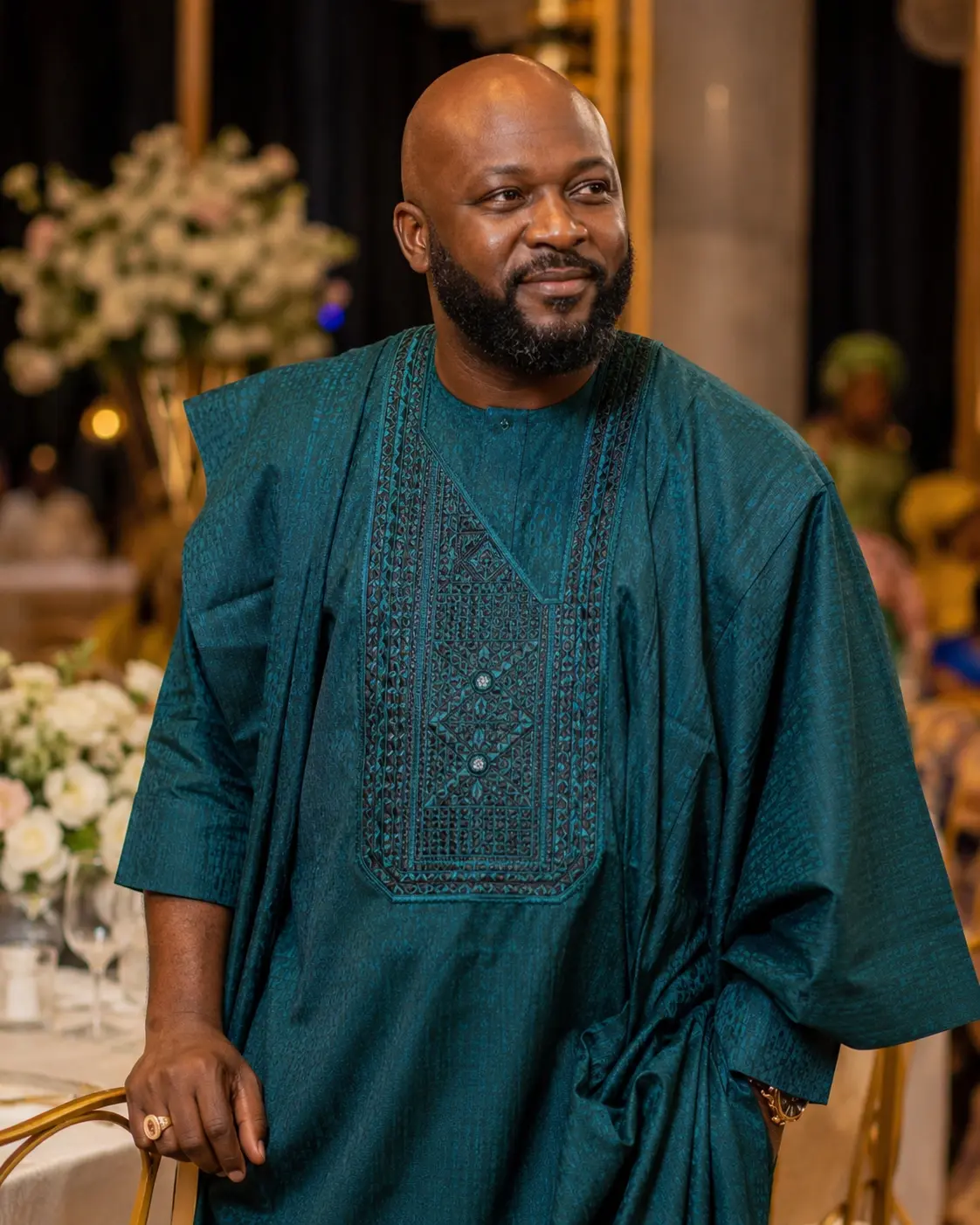
£1,200+ — the groom, or the wedding you are in the party for
- Sculpted agbada in fine wool-silk with hand embroidery, cut with a real shoulder and a hem that hangs.
- A second, lighter look for the reception — you will not survive the night in the agbada.
- Cap fitted properly, not perched. This is the detail most men get wrong at this price.
Worth it once, for the wedding where you are in the photographs that get framed.
05
What to change for your build
The same outfit is a different garment on a different frame. This is the short version; the longer one, with looks attached, sits in Build Filter™.
- Broad
- One tone head to toe, soft shoulder, matte cloth, waist taken in. Skip contrast trousers entirely.
- Tall
- Ask for extra length everywhere and break the vertical with a visible waist or a two-tone set. Larger-scale embroidery reads correctly on you.
- Athletic
- Buy for the chest, then pay to bring the waist and sleeve in. Avoid stretch blends.
- Slim
- Heavier, textured cloth and a little shoulder structure. Layer — a waistcoat or wrapper adds the substance the cut will not.
- Shorter
- Matched tone, higher waist, short break, and have the agbada or kaftan shortened rather than worn long.
- Fuller
- Structure beats stretch. A clean single-breasted line in matte cloth, worn slightly longer, in one colour.
06
What to have made and what to buy
Have made: agbada, aso ebi, anything where the cloth is unusual or the volume is the point. Off-the-peg agbada is cut straight through the waist and it shows in every photograph.
Buy and alter: senator sets, suits, shirts. A £180 senator set with £40 of alterations beats a £400 one straight off the rail. I have owned both.
Buy and leave alone: shoes and jewellery. One watch, one bracelet, nothing that competes with the cloth.
07
The houses I would actually spend with
I write full spotlights on each of these — history, style DNA, what I like, who it is for and, just as usefully, who it is not for. For a wedding specifically:
- Lucky Enemuo Afrika
Where I would send a groom for a corded agbada with real presence. Order eight weeks out, more if the embroidery is heavy.
- Tee Apparel
For the man who wants one house to handle the whole look — traditional or suit, plus shoes — and delivered on time.
- Soboye
The London option, and my answer for guest dressing you can wear again. Restrained indigo and adire rather than ceremonial weight.
- KNF Couture
For a clean kaftan or agbada set with a matching fila, without bespoke money. A sensible first proper traditional outfit.
08
Tailors, and how to brief one
The tailor matters more than the label. What I say now, having learned it the hard way: bring a photograph of the outcome, not the garment. Say where you will be sitting, standing and dancing. Say what you dislike about how clothes usually fit you.
Ask for two fittings, three weeks and one week out. Ask what they would change about your request — a tailor who has an opinion is a tailor worth paying.
The tailor directory09
The timeline that saves you
- Ten weeks out: confirm which events you are attending and whether you are in aso ebi.
- Eight weeks: commission anything made-to-measure. This is the deadline men miss.
- Four weeks: buy and book alterations for the off-the-peg pieces.
- Three weeks: first fitting.
- One week: second fitting, shoes broken in, cap tried on properly.
- The night before: full outfit on, in front of a mirror, photographed on your phone. The camera sees what you do not.
10
Ten mistakes I have made
- 01Wearing the family colour when I was not family.
- 02Buying an agbada online, unaltered, four days out.
- 03One outfit for a fourteen-hour day.
- 04Heavy brocade in a July marquee.
- 05Black instead of midnight navy in warm indoor light.
- 06New shoes, unworn, on a dance floor.
- 07A cap bought without trying it on.
- 08Three bracelets, a chain, and a printed shirt at once.
- 09Trusting an off-the-peg waist measurement.
- 10Assuming the traditional engagement was the casual one.
What to do next
Fix the date, then pick the house. Everything else follows from those two.
Tell me the occasion, the date and your budget bracket. Within 24 hours you get back: two or three houses I would actually approach and why those and not others, the alterations to insist on for your build, a realistic timeline for your date, and a short written brief you can hand to the tailor at the first fitting.
- No fee, no commission, nothing sold here.
- If nobody I trust fits your date or budget, I say so.
- Read by me, answered by me.