What I Wore
A Brown Agbada to a Nigerian Wedding in London
4 min read
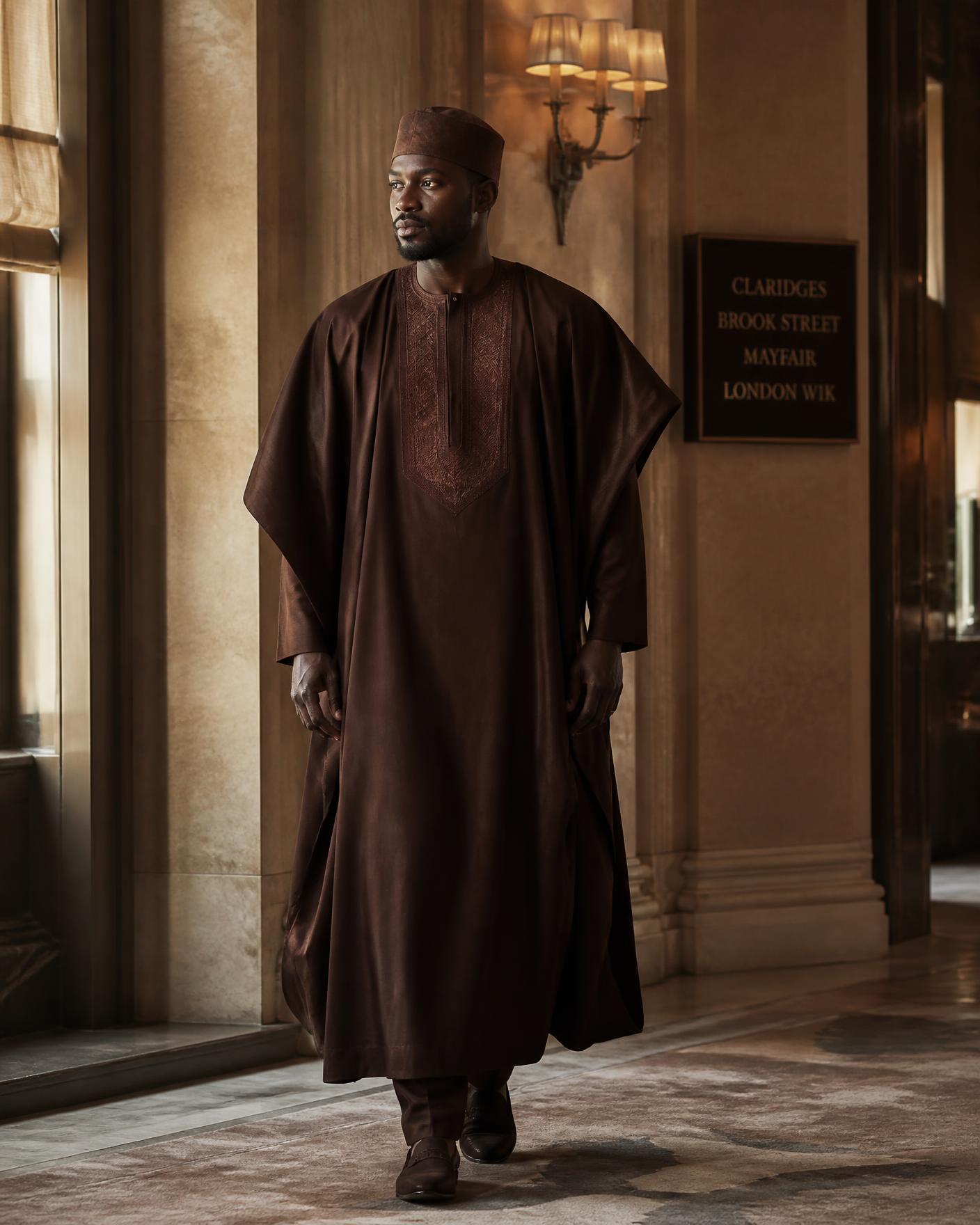
The invitation said 2 p.m. at a hotel in Mayfair. I knew the room would be full of navy suits, burgundy velvet and the occasional white-and-gold agbada that catches every flash. I wanted to look ceremonial without competing with the groom. So I chose brown.
Not tan. Not camel. A deep, almost espresso brown, in a cloth with enough weight to hold its shape through a long afternoon and enough softness to move when I did. Brown is the colour most Nigerian men skip for a wedding, which is exactly why it works. It reads considered rather than loud.
The cut mattered more than the colour. I asked for the shoulders to sit narrow and the sleeves to fall just short of a full sweep — ceremonial, but not theatrical. A wide agbada photographs beautifully standing still and badly everywhere else: through doorways, at a table, holding a drink. Slightly reined in, it still moves the way it should when you greet someone, and it does not knock over the glassware.
Underneath, a matching kaftan and trousers in the same tone, with tonal embroidery at the neckline only. No contrast thread, no gold. When everything is one colour family, the eye reads the silhouette instead of the decoration, and the silhouette is the part you actually paid for.
Accessories were deliberately quiet. A brown fila, brushed the same direction as the cloth. Dark brown leather slip-ons, no metal. One ring. I carried a cream pocket square and, in the end, left it in my pocket — the look was already finished without it.
What I got right: the colour, and having the sleeves shortened. In a room of navy and burgundy, brown was the only thing that did not repeat, and I was comfortable from the church to the last dance.
What I would change: the cap. The tone was a shade off the cloth, close enough to look like an accident rather than a decision. Next time I would either match it exactly or go somewhere clearly different — black, or ivory.
On the maker: this was made to measure rather than bought, and the difference is the shoulder. If you are having one cut, ask your tailor for a narrower shoulder line and a sleeve that stops short of the full sweep, and bring a photograph of yourself seated, not standing. The houses in the Designer Spotlights that handle this well — Tee Apparel and Lucky Enemuo Afrika in particular — will understand exactly what you mean.
Would I wear it again? Yes, but differently. Same cloth, same cut, different cap, and no pocket square. A brown agbada is not the obvious choice for a Nigerian wedding, and that is precisely why I would wear it again.