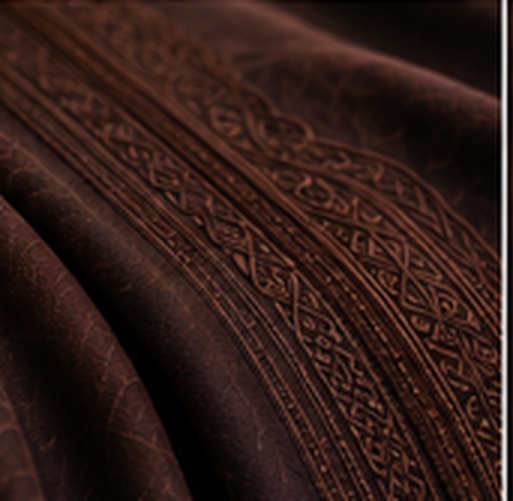
Almost every outfit I have regretted was the right cut in the wrong cloth. The tailoring was fine. The fabric had simply been chosen for Lagos and worn in Croydon.
Native attire was designed for open air, high ceilings and heat that moves. British occasions happen in sealed rooms with the heating on and two hundred people in them. This page is the conversion table. Where I quote a figure it is an indicative UK market range for 2026, not a quote I paid.
01
Why cloth decides more than cut here
A good tailor can rescue a mediocre pattern. Nobody can rescue the wrong fabric. It will crease where you sat, hold the temperature of the room, and tell the camera exactly what it is made of.
So I brief cloth first now, and only then the cut. Three questions answer it: how long am I in the room, how hot will that room be, and will I be photographed under warm light or a flash.
02
Weight, and the number to ask for
Ask your tailor or the merchant for grams per metre. It is the single most useful number in this entire subject and almost nobody in this space quotes it.
- Under 180 g/m: summer only, unlined, creases fast.
- 190–230 g/m: British summer and any warm indoor room.
- 240–280 g/m: the year-round range. If you are having one thing made, make it here.
- 290 g/m and above: winter, outdoor photographs, and coats.
An agbada takes roughly five to seven metres depending on your height and how wide you want the sleeve to fall. A kaftan takes two and a half to three. Buy an extra half metre — repairs and a matching cap depend on it.
03
The cloths, one by one
- Wool-silk blend 240–280 g/m
- Holds a hem, drapes without clinging, reads rich rather than shiny. Works in a heated hall and a summer marquee. Indicative £45–£110 a metre.
- English worsted wool 260–320 g/m
- Crease-recovers overnight, survives a train, tailors love cutting it. Too plain for aso ebi, ideal for anything you want to wear ten times. Indicative £60–£150 a metre.
- Raw silk / dupioni 180–220 g/m
- Slubbed texture photographs superbly. Marks with water and shows every seat crease. Choose it for a two-hour ceremony, not a nine-hour night.
- Swiss voile 120–160 g/m
- Cool, crisp, and honest about quality — cheap voile feels papery immediately. Needs lining for winter. Indicative £40–£90 a metre.
- Cotton damask 200–260 g/m
- Stiff sheen that reads as ceremony. It does not breathe in a heated venue and it holds a crease where you sat. Indicative £15–£30 a metre.
- Cotton or Swiss lace Varies
- Correct for engagements and aso ebi. Ask for cotton voile lining, never acetate.
- Polyester lace or brocade Varies
- Flares white under flash, traps heat, and holds smoke and food from the room. The most common reason a photographed outfit looks cheaper than it cost.
- Linen and linen-silk 190–240 g/m
- Anything under 190 g/m creases into paper by the second hour. Linen-silk keeps the coolness and loses half the crumple.
- Adire and hand-dyed cotton 180–220 g/m
- No two lengths are identical, so buy a metre more than you need and expect first-wash movement.
- Aso oke Heavy
- Hand-woven and weighty. Magnificent for the ceremony hour; plan a second, lighter look for the evening.
The default I now recommend
Best for a senator set or a dinner jacket
Beautiful, unforgiving
The traditional choice, correctly used
Traditional, difficult indoors
Only if lined, and only in cotton
The one I would avoid
Summer only, and heavier than you think
For daytime and for Journal-worthy pieces
Ceremonial, structural, hot
04
Lining, the part nobody discusses
Lining is where cheap making hides. Acetate is standard because it is cheap; it does not breathe, and in a hot hall it is the reason a good outfit smells by hour six.
Ask for cupro (Bemberg) or cotton voile. It adds a small amount to the cost and changes the whole experience of wearing the thing. For summer, ask for half-lining or an unlined body with lined sleeves so the garment still slides on.
For lace, cotton voile in a tone slightly darker than the lace stops the see-through effect that flash photography exposes.
05
Month by month in Britain
- November – February
- The trap is not the cold outside, it is the heat inside. Halls run hot and coats come off in the first ten minutes. Wool-silk or worsted, one lined layer, and a coat you are happy to leave at the door.
- March – May
- Unstable. Mid-weight wool-silk and a waistcoat or wrapper you can remove. Nothing pale enough to show rain.
- June – August
- Marquees and garden receptions. Linen-silk, heavier linen, Swiss voile, unlined or half-lined. Avoid cotton damask entirely — I have sweated through it in a July marquee and the photographs show it.
- September – October
- The best months for cloth in this country. Anything in the 240–280 g/m range, and the season where an agbada is genuinely comfortable start to finish.
06
How cloth behaves under a camera
British function rooms run warm tungsten or LED, and photographers add flash. Both punish the same materials.
Synthetic sheen goes white and flat. Pure black loses its shape and becomes a silhouette. Pure white goes grey against skin. Matte and textured cloth — wool-silk, raw silk, brushed cotton, aso oke — keeps depth in every frame.
The test I use the night before: full outfit on, one photograph under a warm lamp with flash on. The camera sees what the mirror forgives.
07
Buying cloth in Lagos and in London
Lagos. Balogun and Lekki markets, and the cloth houses your tailor already buys from. Prices are lower, selection is wider, and you are trusting somebody else's eye unless you are there. Always ask for a photo of the length in daylight, not under shop lighting.
London. Peckham and Dalston for lace, damask and aso oke; Berwick Street and the mill merchants for wool, wool-silk and worsted. You pay more per metre and you get to touch it, which for a first commission is worth the difference.
Buy from the same source your tailor uses if you can. A tailor working with cloth they know will cut it better.
08
Care, travel and creasing
- Hang, do not fold. Anything embroidered travels on a hanger in a garment bag, never in a case.
- Steam, do not press. An iron flattens embroidery permanently. Twenty minutes in a bathroom with a hot shower running solves most travel creasing.
- Air before you clean. Dry cleaning degrades hand embroidery. Air it for two days and spot-clean instead.
- Keep the offcuts. Half a metre in a bag in the wardrobe has saved two of my outfits.
09
Where to take this
Take the weight, the lining and the month to your tailor before you talk about cut. If you do not yet know what you are having made, the occasion guides answer that first.
What to do next
Name the month and the room before you name the cloth. Your tailor will thank you.
Tell me the occasion, the date and your budget bracket. Within 24 hours you get back: two or three houses I would actually approach and why those and not others, the alterations to insist on for your build, a realistic timeline for your date, and a short written brief you can hand to the tailor at the first fitting.
- No fee, no commission, nothing sold here.
- If nobody I trust fits your date or budget, I say so.
- Read by me, answered by me.