What I Wore
A rust safari suit, relaxed but not careless
6 min read
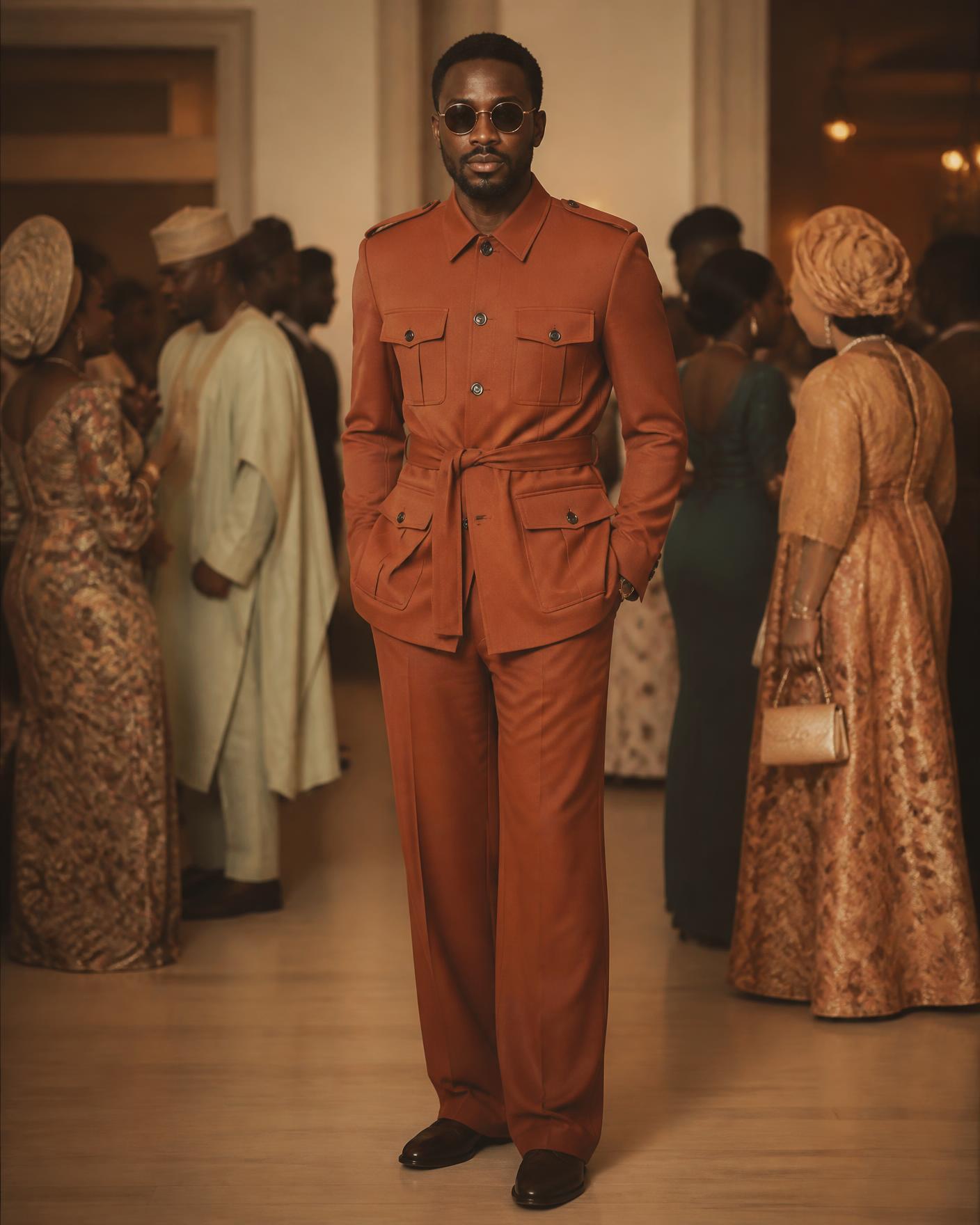
I wanted colour without costume. A rust safari suit — strong shoulders, clean pockets, no embroidery — felt right for an Owambe where the room was already loud.
I have worn agbadas to weddings and two-piece suits to black-tie dinners, but an Owambe asks for something else. It wants colour, yes, but it also wants ease. You are going to sit, stand, dance, and probably eat jollof over a conversation that lasts two hours longer than planned. The outfit has to survive all of it without looking like it is trying to leave early.
This rust safari suit was my answer. I bought it as a set — jacket and trousers from the same cloth — which is the only way a safari cut works. Mismatched separates make it look like a uniform from a job you no longer hold. The shoulders are structured enough to hold authority, but the body is relaxed; the belt pulls the waist in so the silhouette does not become a tent.
The colour is the thing people remember. Rust, terracotta, burnt sienna — call it what you want. It reads as celebration without shouting. Under the hall lights it glows rather than glares. I kept the rest quiet: dark brown loafers, a slim belt, no pocket square, no fila. The absence of headwear was deliberate. A safari suit with a fila can tip into costume; without one, it stays modern.
— What I would change: the trousers could have been an inch shorter. They broke cleanly over the shoe, but at 1am, after an hour of dancing, the break had become a stack. Next time I will ask for a slight taper and a higher hem. And I would add a second shirt. A safari jacket in summer absorbs heat; a fresh shirt at midnight is not a luxury, it is survival gear.
The lesson: an Owambe is not a wedding. You do not need to outdress the room. You need to look like you understood the invitation.