Wedding dressing — Maison Jones

The Guest

Wedding

Dress code — Formal / Traditional

The Brief

Dressing for the day that belongs to someone else — presence without competition.

The Guidance

Lean into structure: a soft-shouldered two-piece in warm neutrals, or a finely embroidered kaftan for a traditional ceremony. Keep jewellery to one considered piece and let the fabric carry the occasion.

Find hands worth trusting

How To Dress

What I have learned the hard way

Etiquette

  • Ask what the couple actually want before you decide anything. If there is an aso ebi, the fabric and colour are chosen for you and the only decision left is who cuts it.

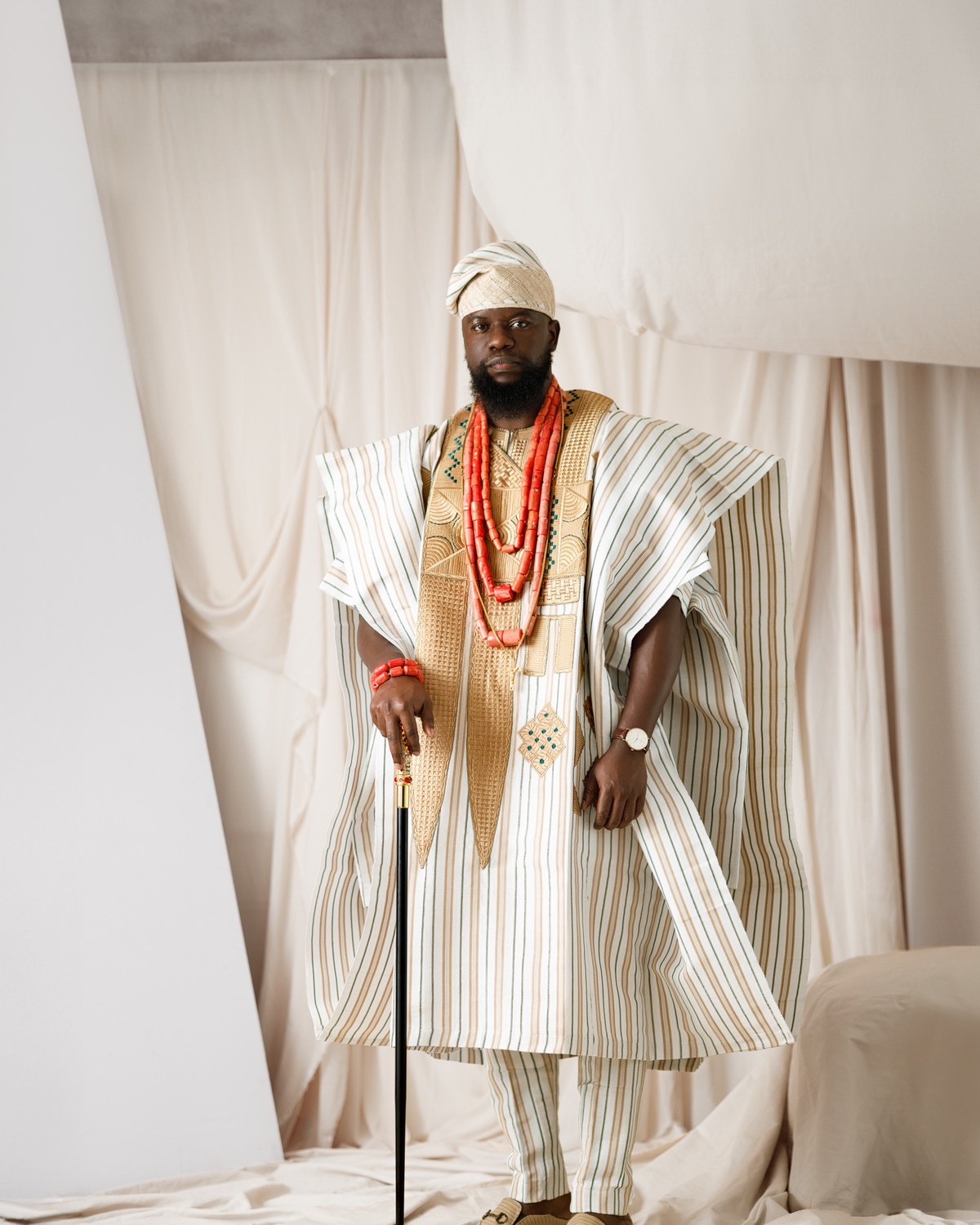
  • Never outdress the groom. If he is in a corded agbada, you wear a kaftan or a clean two-piece — not a bigger agbada.

  • Nigerian weddings in Britain often run two ceremonies in one weekend. Plan traditional for the engagement and tailoring for the white wedding, not one outfit stretched across both.

  • Cover your head properly if the ceremony calls for it. A well-blocked fila finishes the look; a crumpled one undoes it.

  • Bring a second shirt. Church, hall, dancing and a British summer in a heavy fabric is a long day.

Colours & Fabric

  • Ivory, bone and off-white read expensive on camera and photograph better than pure white under hall lighting.

  • Deep tones — burgundy, midnight navy, forest — are the safest way to look formal without competing with the couple.

  • Gold and cream embroidery belongs to the couple's party. As a guest, keep embellishment quiet.

  • If the aso ebi colour does not suit you, negotiate the shade rather than the colour: a muted version of the same family still reads as part of the group.

Mistakes I See

  • Ordering three weeks out. Embroidery and fittings cannot be rushed and rushed work always shows in the shoulders.

  • Wearing a heavy corded agbada to an indoor London reception in July.

  • Trousers that break twice over the shoe. Traditional or Western, the hem is where cheap tailoring announces itself.

  • Buying an outfit that fits the photos but not the dancing. Sit down and raise your arms in the fitting.

Step By Step

Worked backwards from the date

This is the order I do it in, and the point at which each decision stops being reversible. Start at the top the day the invitation arrives.

  1. 01

    As soon as you are invited

    Establish how many events you are dressing for

    A Nigerian wedding in Britain is rarely one occasion. There is often an engagement or traditional ceremony on the Friday or Saturday and a white wedding the next day, sometimes with a separate reception. Ask the couple or the family what you are being invited to, and whether there is an aso ebi for any of them. Plan traditional for the traditional and tailoring for the white wedding — one outfit stretched across both always looks like a compromise.

    Guests routinely discover the second ceremony three weeks out. Ask early and budget for two looks, not one.

  2. 02

    10–12 weeks out

    Fix your register against the groom

    Your job as a guest is to look considered without competing. If the groom is in a corded agbada, you wear a kaftan set or a clean two-piece — not a bigger agbada. If you are in the wedding party, the couple will set the register for you. If you are family, expect to be one step more formal than an ordinary guest and dressed in the aso ebi.

  3. 03

    8–10 weeks out

    Commission the traditional piece first

    Embroidery and hand-finishing are the long lead items — they cannot be rushed and rushed work shows in the shoulders every time. Get the cloth chosen and the first measurements taken now. If you are having a suit made for the white wedding, it can safely follow two or three weeks later.

    Ordering three weeks out is the single most common wedding mistake I see. You will pay a rush fee for worse work.

  4. 04

    6 weeks out

    Choose cloth for the month and the venue

    A heavy corded agbada in an indoor London reception in July is a long, uncomfortable day. Ask the tailor for a lighter aso oke or a cotton-blend base, and reserve the heavier ceremonial cloth for autumn and winter dates. For the white wedding, an unlined or half-lined jacket in the summer months and flannel or a mid-weight worsted from October onwards.

  5. 05

    3–4 weeks out

    First fitting — and the hem

    The hem is where cheap tailoring announces itself, traditional or Western: one clean break over the shoe, never two. Check the trouser length in the shoes you will actually wear. Sit down and raise your arms in the fitting — the outfit needs to survive a church service, a hall, and dancing.

  6. 06

    2 weeks out

    Fila, shoes and the second shirt

    Have the fila blocked — a crumpled cap undoes a good agbada. Break the shoes in. Pack a second shirt or under-layer: church, hall, dancing and a British summer in a heavy fabric is a twelve-hour day and photographs happen at hour ten as much as hour two.

  7. 07

    The day before

    Lay everything out and check the small things

    Full look laid out, shoes polished, cufflinks and studs found rather than searched for on the morning. Confirm the ceremony start time and whether heads are covered in the church — it changes what you carry in.

Three Worked Examples

What I would actually wear

Written out garment by garment at three levels of spend. Figures are indicative UK market ranges, not quotes.

Guest, white wedding

  • Mid-weight two-piece in midnight navy or deep charcoal
  • Bone or pale blue shirt, no pattern fighting the suit
  • Sober tie or none, one texture only
  • Polished dark Oxfords

Indicative UK market range: £400–£1,200 made to measure

The safest good decision at a British-Nigerian white wedding. Formal without pulling attention, and you will wear it again within a month.

Guest, traditional ceremony

  • Kaftan and trouser set in a quiet aso oke or brocade
  • Restrained embroidery at the neck only
  • Blocked fila in the same tone family
  • Plain leather slippers or slip-ons

Indicative UK market range: £350–£900 made to order

This is the register I dress to as a guest. The brown agbada in What I Wore was one step above it — correct because I was close to the family, and too much for an ordinary invitation.

Groom or father of the couple

  • Corded or hand-embroidered agbada over matching kaftan and trouser
  • Volume cut to the frame rather than a standard block
  • Blocked fila, beaded slippers
  • One statement only — cording or colour, not both

Indicative UK market range: £1,500–£4,000 made to order

This is the one occasion where full ceremonial presence is the correct answer. Order twelve weeks out and expect two fittings.

Designers I Recommend For This

Not every house. These ones.

A short list, chosen for this occasion specifically — with what each house is actually good at, and who it suits.

Lucky Enemuo Afrika — occasion dressing

Lagos

Lucky Enemuo Afrika

This is who I point grooms to. The corded agbadas have real ceremonial presence and the volume is cut to flatter a broad frame rather than swallow it.

Best for
Grooms and fathers of the couple; tall or broad builds
Price guide
£105–£345 (indicative, Lagos pricing)
Tee Apparel — occasion dressing

Lagos

Tee Apparel

The house I trust for a full wedding-party look — suit or traditional plus shoes from one place, with structure that survives a twelve-hour day.

Best for
Groomsmen and guests who want one house to handle everything
Price guide
£££ (bespoke, POA)
Soboye — occasion dressing

London, United Kingdom

Soboye

For the London wedding where you want African design without ceremony. Considered, quieter pieces you can wear again after the weekend.

Best for
Guests in Britain who prefer restraint to spectacle
Price guide
££–£££

Do This Next

Three things, this week

01

Ask the couple two questions this week

How many ceremonies, and is there an aso ebi. Everything about your budget and timeline follows from those answers.

02

Get the traditional piece measured before the suit

It is the long lead item. The suit can be made in half the time.

03

Read the full wedding guide before you commission

Dress codes, aso ebi etiquette, indicative budgets and a week-by-week timeline in one place.

The Definitive Guide

Dressing for a Nigerian wedding in the UK — the dress codes, aso ebi, budgets and timeline

Read the full guide

What to do next

01 — The introduction

Send me the date and the dress code. I will tell you what I would wear and which two houses I would ask.

Tell me the occasion, the date and your budget bracket. Within 24 hours you get back: two or three houses I would actually approach and why those and not others, the alterations to insist on for your build, a realistic timeline for your date, and a short written brief you can hand to the tailor at the first fitting.

  • No fee, no commission, nothing sold here.
  • If nobody I trust fits your date or budget, I say so.
  • Read by me, answered by me.
Request an introduction
02 — If the date is further off

The House Letter

See our Privacy Notice.

One letter a month: what I wore and to which occasion, what it cost, what I would change, and the two or three houses worth your time that month. No offers, no forwarding your address, one click to leave.